
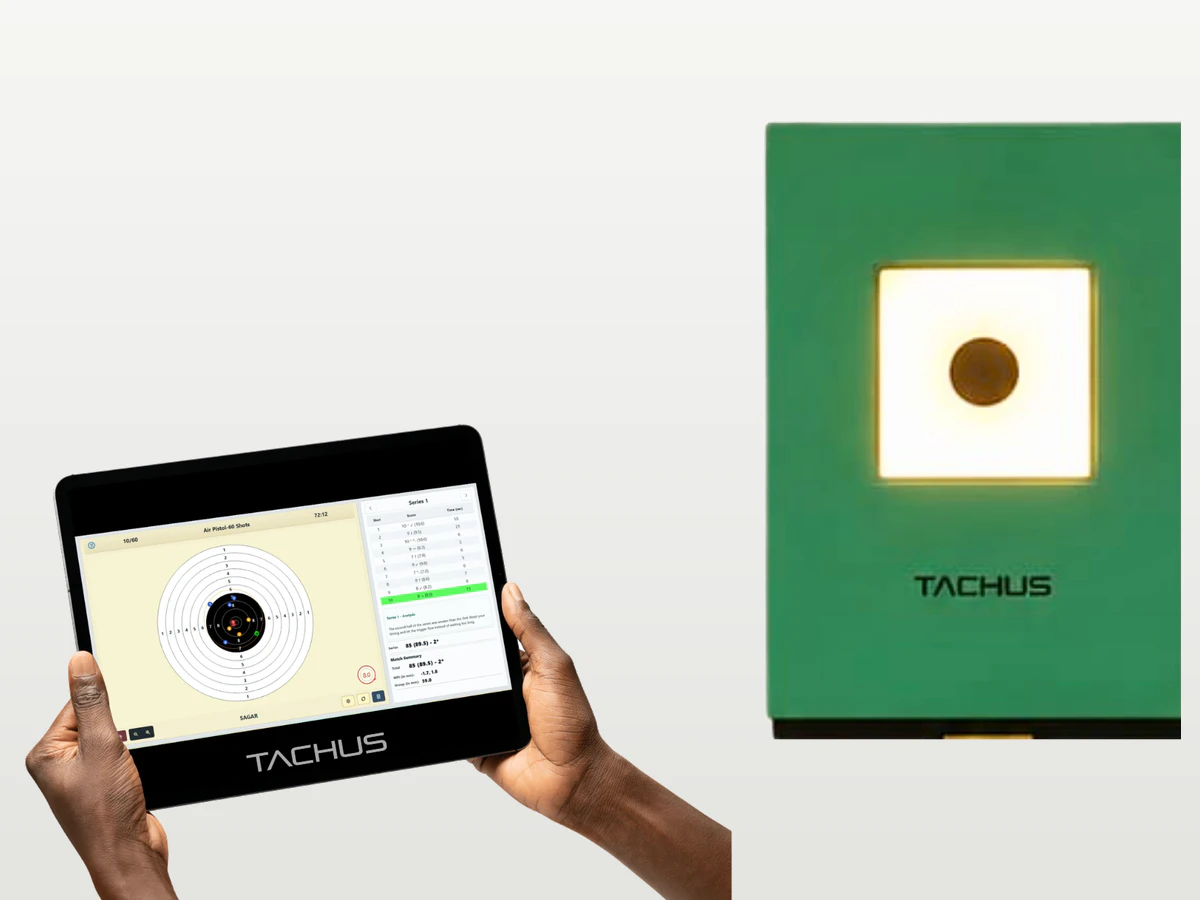
Walk into a modern shooting range and the first difference you notice from an older one is the screens. Nobody is squinting through a spotting scope, nobody is walking downrange to change targets, and scores appear the moment a shot lands. The equipment making that happen is an electronic target system, and the way it works is simpler than most people expect.
The problem it solves
Paper targets do one thing well: they record exactly where a shot went. Everything around that is slow. Someone has to change the target, retrieve it, score it by eye or with a gauge, and write the result down. In training, that overhead eats session time. In competitions, it adds officials, disputes and delays. An electronic target keeps the part that matters, a physical record of the shot, and automates everything else.
Acoustic detection, step by step
Several detection technologies exist, including optical systems that image the target and trainers that use lasers. Tachus systems use acoustic detection, which locates each shot from the sound of its own impact.
- The shot lands. The pellet or bullet passes through the target’s impact medium: a paper roll at 10 Meter, or a rubber roll at 25 Meter and 50 Meter.
- The impact makes a sound wave. The strike produces a pressure wave that spreads outward from the impact point at a known speed.
- Sensors hear it at slightly different times. Acoustic sensors positioned around the target frame each detect the wave. A shot near the top of the target reaches the top sensor fractionally earlier than the bottom one.
- Timing differences become coordinates. The system converts the sensor signals to electrical data and computes the impact position from differences in the arrival times, the same triangulation idea used to locate earthquakes, at a much smaller scale.
- The score appears. Software maps the coordinates onto the scoring rings for that discipline and displays the shot position and value on the shooter’s screen, typically within a fraction of a second.
Because the calculation uses timing physics rather than human judgement, the same shot always produces the same score, and decimal values (10.4 rather than a plain 10) come free.
What happens after the shot
The score on the screen is the visible part. The useful part for coaches is what accumulates underneath: every shot’s coordinates, series totals, match totals and group patterns. Shot pattern views reveal what a box of scored paper targets never could: a group drifting low and left under fatigue, or a flinch appearing in the second series. Reports can be exported and reviewed after the session.
At the range level, management software coordinates many electronic lanes at once: assigning shooters, starting timed events, driving red/green range lights, showing live rankings and printing results. That is what turns a row of electronic targets into a venue that can host a competition.
What still needs maintaining
Electronic targets require some maintenance, but the routine is short. The impact medium is consumable (paper rolls run out and rubber rolls wear), and 10 Meter targets collect pellets in a trap that needs emptying. The electronics themselves are monitored by the software in modern systems, which report hardware health so a failing component is caught before match day.
Choosing a system
The main questions are the same for any range: which distance and disciplines you shoot (10 Meter, 25 Meter, 50 Meter, or a mix), how many lanes you need, whether you will run timed events that need light control, and which scoring device you will use. Every Tachus model includes Windows scoring software and an Android application optimized for tablets in portrait orientation. Tachus 25 Electronic Target System, Tachus 50 Electronic Target System and Tachus 50/10 Electronic Target System also include a mounting stand, with installation and service at the range provided by Tachus. If you are comparing options for a specific discipline, the products overview sets out which Tachus system covers which events, and our team can advise on lane counts and layouts for a new range. For 10 Meter air rifle and air pistol, see the Tachus 10 Electronic Target System.